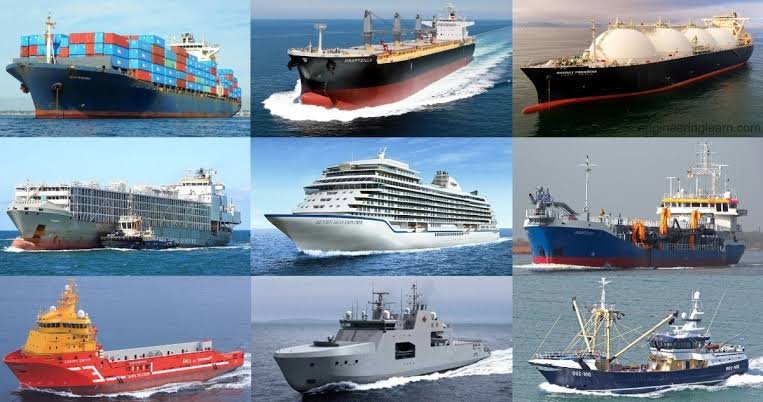
Ship design is one of the most important parts of marine engineering because every vessel is built for a specific purpose. A ship that carries crude oil cannot be designed like a cruise ship, and a naval destroyer cannot follow the same layout as a container vessel. Each type of ship requires a different hull shape, propulsion system, cargo arrangement, safety structure, stability plan, and onboard technology. In simple terms, ship design is the process of creating a vessel that performs efficiently, safely, and economically in its intended operating environment.
Modern ship design combines science, engineering, safety regulations, environmental standards, and commercial needs. Designers must consider speed, cargo capacity, fuel efficiency, crew comfort, maneuverability, wave resistance, emissions, and long-term maintenance. As a result, ships may look similar from a distance, but their internal structure and engineering can be completely different. Understanding these differences helps explain why the maritime industry uses specialized vessels for cargo transport, passenger travel, offshore work, defense, fishing, research, and support operations.
Cargo Ships: Ship Design Focused on Capacity and Efficiency
Cargo ships are among the most common vessels in global trade, and their ship design focuses mainly on carrying large volumes of goods safely across long distances. Container ships, bulk carriers, and general cargo ships all fall under this category, but each has its own structural priorities. Container ships are designed with long, open decks and strong cell guides that hold standardized shipping containers in place. Their hulls are long and narrow to improve speed and fuel efficiency, while their stability systems must account for heavy container stacks above deck. In contrast, bulk carriers transport loose materials such as coal, grain, iron ore, and cement, so their ship design includes large cargo holds, reinforced tank tops, and hatch covers that protect cargo from seawater and weather.
A major difference in cargo ship design is how weight is distributed. Bulk carriers need strong internal framing because heavy materials place intense pressure on the hull. Container vessels, however, need structural strength both below and above deck because cargo is stacked vertically. Designers must also consider loading and unloading efficiency. Container ships are built to work with port cranes, while bulk carriers may use shore-based equipment or onboard cranes depending on their trade route. Fuel consumption is another key factor. Since cargo ships travel long international routes, ship design often includes energy-saving hull forms, slow-speed diesel engines, optimized propellers, and ballast water systems. These features help reduce operating costs and improve performance. Overall, cargo ship design is practical, commercial, and highly focused on carrying maximum cargo with minimum fuel use.
Tankers: Ship Design Built Around Safety and Liquid Cargo
Tankers have a very different purpose from dry cargo ships because they transport liquids such as crude oil, petroleum products, chemicals, liquefied natural gas, and fresh water. Because their cargo can be flammable, toxic, or environmentally dangerous, tanker ship design places a strong emphasis on safety, containment, and damage prevention. Oil tankers, for example, usually have double hulls to reduce the risk of spills if the outer shell is damaged. Inside the vessel, cargo tanks are divided into sections to control liquid movement, improve stability, and reduce stress on the ship’s structure. This internal division is one of the most important differences between tanker design and other forms of ship design.
Chemical tankers require even more specialized materials and systems. Their tanks may be coated or built from stainless steel to prevent chemical reactions and contamination. They also need separate pumping systems, pipelines, and ventilation arrangements for different cargo types. LNG carriers are even more unique because they transport liquefied natural gas at extremely low temperatures. Their ship design includes insulated cargo containment systems, cryogenic tanks, and advanced safety monitoring equipment. Since liquid cargo can shift inside tanks, designers must carefully manage free surface effect, which can reduce stability if not controlled. Therefore, tanker ship design is not only about transportation but also about risk management. Every detail, from tank layout to emergency systems, is created to protect the ship, crew, cargo, and marine environment.
Passenger Ships and Cruise Ships: Ship Design for Comfort, Space, and Safety
Passenger ships and cruise ships have a ship design philosophy that is very different from commercial cargo vessels. Instead of focusing only on cargo volume, their main priorities are passenger comfort, safety, entertainment, accessibility, and hotel-style services. Cruise ships are essentially floating resorts, so their design includes cabins, restaurants, theaters, pools, shopping areas, medical centers, lounges, and recreational spaces. The ship must also provide stable movement at sea because passenger comfort depends heavily on reducing rolling, vibration, and noise. As a result, cruise ship design often includes stabilizers, advanced HVAC systems, sound insulation, and carefully planned public spaces.
Safety is also a major part of passenger ship design. These vessels must include lifeboats, evacuation routes, fire zones, watertight compartments, emergency power systems, and clear passenger flow arrangements. Since thousands of people may be onboard, designers must plan stairways, corridors, muster stations, and emergency exits with great care. Unlike cargo ships, passenger ships usually have large superstructures with multiple decks above the waterline. This creates challenges for stability, wind resistance, and weight distribution. Therefore, naval architects must balance luxury features with safe engineering principles. Ferries, another type of passenger vessel, are designed differently again. They often operate on short routes and may carry cars, buses, or trucks, so their ship design includes vehicle decks, ramps, quick loading systems, and strong maneuverability for frequent port calls. Whether it is a cruise liner or a ferry, passenger ship design is centered on people, safety, and onboard experience.
Naval Ships: Ship Design for Speed, Strength, and Defense
Naval ships are designed for military operations, so their ship design is shaped by speed, survivability, stealth, weapons systems, sensors, and mission flexibility. Unlike commercial vessels, naval ships must perform in high-risk environments and may need to defend themselves against air, surface, underwater, and missile threats. Destroyers, frigates, aircraft carriers, patrol boats, submarines, and amphibious ships all have different roles, but their designs share a focus on performance and protection. A destroyer, for example, requires a powerful propulsion system, advanced radar, missile systems, and a hull that can handle high-speed operations in rough seas.
Stealth is another major factor in modern naval ship design. Many warships use angled surfaces and reduced radar signatures to make detection more difficult. Their internal layout is also designed for damage control, with fire zones, armored sections, backup power systems, and redundant machinery. Aircraft carriers have one of the most complex forms of ship design because they must function as mobile airbases. They require huge flight decks, aircraft elevators, hangars, aviation fuel systems, command centers, and advanced navigation equipment. Submarines are even more specialized because they operate underwater. Their design focuses on pressure resistance, quiet propulsion, hydrodynamic efficiency, life-support systems, and stealth. Naval ship design is therefore less about commercial efficiency and more about mission success, protection, and tactical advantage.
Offshore and Support Vessels: Ship Design for Specialized Marine Operations
Offshore vessels are built to support oil, gas, wind energy, subsea construction, and other marine operations. This category includes platform supply vessels, anchor handling tug supply vessels, offshore construction vessels, cable-laying ships, seismic survey vessels, and service operation vessels. Their ship design is highly specialized because they often work in rough weather, near offshore platforms, or around expensive subsea equipment. A platform supply vessel, for example, has a large open deck for carrying equipment, drilling supplies, pipes, containers, and liquid cargo. Its design must support safe cargo handling while maintaining stability during loading, unloading, and rough sea conditions.
Dynamic positioning is a key feature in many offshore ship design projects. This system allows a vessel to hold its position automatically using thrusters, GPS, sensors, and computer controls. It is essential when working near platforms, wind turbines, or subsea installations where anchoring may not be possible. Anchor handling vessels require powerful engines, heavy-duty winches, strong stern rollers, and reinforced structures because they move large anchors and towing equipment. Cable-laying ships need specialized decks, cable tanks, tensioners, and precise control systems. Service operation vessels used in offshore wind farms are designed for crew comfort, safe transfer systems, workshops, and long stays at sea. In this sector, ship design is driven by operational function. Each vessel is engineered around the exact job it must perform, making offshore vessels some of the most technically diverse ships in the maritime industry.
Fishing, Research, and Special Purpose Ships: Ship Design for Unique Working Conditions
Fishing vessels, research vessels, icebreakers, and other special purpose ships show how flexible ship design can be. Fishing vessels are designed around the method of catching, storing, and processing seafood. A trawler needs strong towing power, winches, net-handling equipment, fish holds, refrigeration systems, and a stable working deck. Longliners and purse seiners have different layouts based on their fishing gear and operating style. Because fishing can happen in difficult weather and remote waters, these vessels require reliable machinery, safe deck arrangements, and efficient storage systems.
Research vessels have a completely different ship design approach. They support scientific work such as ocean mapping, climate research, marine biology, and underwater exploration. Their design may include laboratories, sonar systems, moon pools, cranes, remotely operated vehicle equipment, and quiet propulsion to avoid disturbing sensitive instruments. Icebreakers are another highly specialized type of ship. Their hulls are reinforced and shaped to ride up onto ice and break it with weight. They also need powerful engines, strong propellers, and protection against freezing conditions. Special purpose ship design proves that no single vessel layout works for every mission. Instead, naval architects adapt hull shape, equipment, power systems, and internal spaces to match the ship’s operating environment.
Conclusion
The main reason ships look and perform differently is that every vessel is created for a specific mission. Cargo ships focus on capacity and fuel efficiency, tankers prioritize safe liquid containment, cruise ships emphasize comfort and passenger safety, naval vessels are built for defense and speed, offshore vessels support complex marine operations, and research or fishing vessels serve highly specialized tasks. This is why ship design is such a critical field in maritime engineering.
A successful ship design must balance performance, stability, safety, cost, environmental impact, and operational needs. Even small changes in hull form, cargo layout, propulsion, or equipment can significantly affect how a vessel performs at sea. As global trade, offshore energy, passenger travel, and environmental regulations continue to evolve, ship design will keep advancing. Future ships will likely become more fuel-efficient, automated, safer, and cleaner, but the core principle will remain the same: every great vessel begins with a design that matches its purpose.
FAQs About Ship Design and Different Types of Ships
What is ship design?
Ship design is the engineering process of planning and developing a vessel’s structure, hull shape, propulsion system, stability, layout, safety systems, and operational features. It ensures that a ship can perform its intended purpose safely and efficiently.
Why do different types of ships have different designs?
Different ships have different designs because they perform different jobs. A tanker carries liquid cargo, a container ship carries containers, a cruise ship carries passengers, and a naval ship supports military missions. Each purpose requires a unique ship design.
What is the most important factor in ship design?
The most important factor in ship design is the vessel’s intended function. Designers must first understand what the ship will do, where it will operate, what cargo or passengers it will carry, and what safety standards it must meet.
How does hull shape affect ship performance?
Hull shape affects speed, stability, fuel efficiency, cargo capacity, and seakeeping ability. A narrow hull may improve speed, while a wider hull may increase stability and deck space. Good ship design balances these factors carefully.
Are modern ships becoming more fuel-efficient?
Yes, modern ships are increasingly designed for better fuel efficiency. Improved hull forms, energy-saving propellers, cleaner fuels, hybrid systems, and digital monitoring tools are now common features in advanced ship design.