Tensile testing is one of the most important forms of mechanical testing used to evaluate how a material behaves when it is pulled apart under controlled force. From steel beams and aircraft components to plastic packaging, medical devices, automotive parts, and construction materials, tensile testing helps engineers understand whether a material is strong, flexible, reliable, and safe for its intended purpose. In manufacturing and product development, this test provides valuable data about tensile strength, yield strength, elongation, ductility, and breaking point. These properties allow companies to compare materials, verify supplier quality, meet industry standards, and prevent product failures before they reach customers.
In simple terms, tensile testing measures how much pulling force a material can withstand before it stretches, deforms, or breaks. Because every product faces some type of stress during use, mechanical testing plays a central role in quality control, safety assurance, and engineering design. Tensile testing is especially useful because it produces measurable, repeatable results that can be used to make better material decisions. Whether a company is producing metal fasteners, polymer films, cables, welds, composites, or structural parts, tensile testing gives clear evidence of performance under tension. As a result, it remains a foundational method in laboratories, factories, research centers, and certification processes around the world.
What Is Tensile Testing in Mechanical Testing?
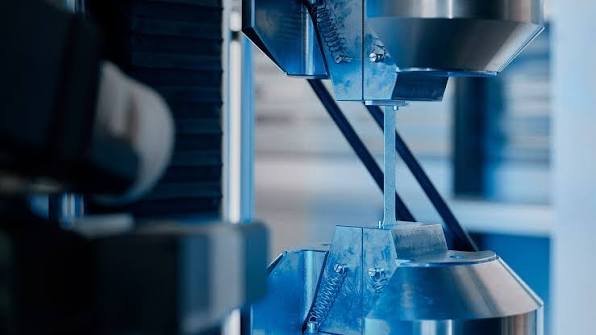
Tensile testing is a controlled laboratory method used to determine how a material responds to stretching force. During the test, a prepared specimen is placed inside a universal testing machine, also known as a tensile testing machine. The machine grips both ends of the sample and pulls it at a controlled speed until the material either reaches a specified level of deformation or breaks completely. Throughout the process, sensors measure the applied force and the amount of extension. This information is then converted into a stress-strain curve, which helps engineers analyze material behavior in detail. Because the process is highly standardized, tensile testing is widely accepted as one of the most reliable forms of mechanical testing for metals, plastics, rubber, textiles, composites, adhesives, and many other materials.
The main purpose of tensile testing is to identify important mechanical properties. Tensile strength shows the maximum stress a material can handle before failure. Yield strength shows the point where the material begins to deform permanently. Elongation indicates how much the material can stretch before breaking, while modulus of elasticity shows stiffness. These results are especially important in industries where safety and durability are critical. For example, a bridge cable must resist high tensile loads, an automotive seat belt must stretch in a controlled way during impact, and a plastic bottle must maintain strength during filling, transport, and handling. Through mechanical testing, manufacturers can confirm that these products meet performance requirements before they are used in real-world conditions. Therefore, tensile testing is not just a laboratory procedure; it is a practical decision-making tool that supports safer design, better manufacturing, and more consistent product quality.
How Tensile Testing Works: Step-by-Step Method
The tensile testing process begins with specimen preparation. A sample is cut or machined into a standardized shape, often called a dog-bone specimen because of its narrow center section and wider ends. This shape helps ensure that the material breaks in the test area rather than near the grips. The dimensions of the specimen depend on the material type and testing standard being followed. Accurate measurement of width, thickness, gauge length, and cross-sectional area is essential because these values are used to calculate stress and strain. In high-quality mechanical testing, even small errors in sample preparation can affect the final results, so laboratories follow strict procedures to maintain accuracy and repeatability.
After preparation, the specimen is placed into the tensile testing machine. The grips must hold the material firmly without slipping or crushing it. Once the sample is secured, the machine applies a pulling force at a controlled rate. As the force increases, the material begins to stretch. At first, many materials behave elastically, meaning they return to their original shape if the load is removed. As the force continues, the material may reach its yield point and begin permanent deformation. Eventually, it reaches ultimate tensile strength, then necking may occur, where the specimen becomes thinner in one region before fracture. The machine records force and elongation throughout the test, allowing software to generate a stress-strain curve. This curve is one of the most useful outputs of tensile mechanical testing because it visually shows stiffness, strength, ductility, and failure behavior. Engineers use this data to compare materials, validate designs, investigate failures, and confirm that products meet required specifications.
Key Tensile Testing Standards Used in Industry
Standards are essential in tensile testing because they make results consistent, comparable, and acceptable across different laboratories and industries. Without standards, one company’s test results might not match another’s due to differences in specimen size, test speed, equipment calibration, or reporting format. Common tensile testing standards include ASTM E8/E8M for metallic materials, ASTM D638 for plastics, ISO 6892 for metals, ISO 527 for plastics, ASTM D412 for rubber, and ASTM D3039 for polymer matrix composites. These standards define how samples should be prepared, how machines should be configured, what test speeds should be used, and how results should be reported. In professional mechanical testing, following the correct standard is necessary for compliance, certification, and customer approval.
Different industries rely on different standards depending on the material and application. Aerospace manufacturers may require highly detailed metal and composite testing because aircraft components must perform under demanding conditions. Automotive companies test metals, plastics, welds, adhesives, and textiles to ensure strength and crash safety. Medical device manufacturers use tensile mechanical testing to evaluate polymers, sutures, tubing, implants, and packaging materials. Construction companies test steel reinforcement bars, cables, bolts, and structural materials to confirm load-bearing capacity. In each case, the standard provides a common technical language between suppliers, manufacturers, regulators, and customers. It also helps reduce disputes because test results are generated using recognized methods. Therefore, tensile testing standards are not simply technical documents; they are the foundation of trust in material qualification, product safety, and industrial quality assurance.
Important Properties Measured During Tensile Testing
Tensile testing provides several important material properties that help engineers understand how a material will perform under load. One of the most common values is ultimate tensile strength, which represents the maximum stress a material can withstand before failure. Another key value is yield strength, which shows when a material begins to deform permanently. This is especially important in structural applications because a product may become unsafe long before it actually breaks. Elastic modulus, also known as Young’s modulus, measures stiffness and indicates how much a material resists elastic deformation. Elongation at break shows how much the material can stretch before it fractures, while reduction of area provides information about ductility. Together, these values make tensile testing one of the most informative forms of mechanical testing.
These properties are useful because strength alone does not tell the full story. A very strong material may be too brittle for certain applications, while a flexible material may not be strong enough to carry heavy loads. For example, glass has high strength in some conditions but low ductility, meaning it can fail suddenly. On the other hand, some metals can deform significantly before breaking, giving visible warning before failure. Plastics may behave differently depending on temperature, loading rate, additives, and manufacturing method. Through mechanical testing, engineers can evaluate these differences and select materials based on actual performance rather than assumptions. This is why tensile testing is widely used in research and development, incoming material inspection, production quality control, and failure analysis. It helps companies choose the right material for the right job and avoid costly mistakes caused by poor material performance.
Real-World Uses of Tensile Testing in Manufacturing
Tensile testing has practical applications across nearly every manufacturing sector. In the automotive industry, it is used to test steel, aluminum, plastics, rubber parts, welds, seat belts, cables, and adhesives. These materials must handle vibration, impact, temperature changes, and long-term stress. In aerospace manufacturing, tensile mechanical testing is even more critical because lightweight materials must deliver exceptional strength without increasing aircraft weight. Engineers use tensile data to qualify titanium alloys, aluminum components, carbon fiber composites, and high-performance fasteners. In construction, tensile testing helps verify the strength of reinforcing bars, structural steel, bolts, wire ropes, and concrete-related materials. These tests support public safety by ensuring that buildings, bridges, and infrastructure can withstand expected loads.
The medical, packaging, electronics, and consumer goods industries also depend heavily on tensile testing. Medical tubing, sutures, gloves, implant materials, and sterile packaging must meet strict performance standards because failure can directly affect patient safety. Packaging films, plastic containers, labels, and seals are tested to ensure they can survive filling, shipping, storage, and handling. Electronics manufacturers test wires, connectors, flexible circuits, and adhesives to prevent product failure during use. Even everyday products such as clothing, footwear, furniture, toys, and household items may undergo mechanical testing to confirm durability and customer satisfaction. In all these examples, tensile testing supports better design, stronger quality control, and fewer product defects. It also helps manufacturers reduce waste because weak materials or defective production batches can be identified early before they cause larger problems in the supply chain.
Why Tensile Testing Matters for Product Quality and Safety
Tensile testing matters because it connects material performance with real-world reliability. A product may look acceptable on the outside, but hidden weaknesses in material strength, ductility, or bonding can cause failure during use. By using mechanical testing, manufacturers can identify these weaknesses before products reach the market. This is especially important in industries where failure can result in injury, financial loss, legal claims, or damage to brand reputation. Tensile testing provides objective data that supports quality assurance, regulatory compliance, supplier verification, and product improvement. It also allows companies to compare different materials and choose options that balance cost, strength, weight, flexibility, and durability.
Another major benefit is consistency. In mass production, manufacturers need every batch of material to perform within acceptable limits. Tensile testing can detect changes caused by poor raw materials, incorrect heat treatment, improper molding conditions, weak welds, contamination, aging, or process variation. As a result, mechanical testing helps maintain stable production quality over time. It also supports failure analysis when a product breaks unexpectedly. Engineers can test failed parts, compare them with approved samples, and determine whether the problem came from material defects, design issues, manufacturing errors, or improper use. This makes tensile testing valuable not only before production but also throughout the entire product lifecycle. Ultimately, tensile testing helps companies build safer products, improve customer trust, reduce recalls, and make more informed engineering decisions.
FAQs About Tensile Testing and Mechanical Testing
What is tensile testing used for?
Tensile testing is used to measure how a material behaves when pulled under tension. It helps determine tensile strength, yield strength, elongation, stiffness, ductility, and breaking point. It is a key part of mechanical testing for metals, plastics, rubber, composites, textiles, and many manufactured products.
Why is tensile testing important in manufacturing?
Tensile testing is important because it confirms whether materials and finished products can handle real-world forces. Manufacturers use it for quality control, material selection, supplier verification, product development, and safety compliance.
What machine is used for tensile testing?
A universal testing machine is commonly used for tensile testing. It grips the specimen at both ends and pulls it at a controlled speed while measuring force and elongation.
What is the difference between tensile strength and yield strength?
Tensile strength is the maximum stress a material can withstand before failure, while yield strength is the point where permanent deformation begins. Both values are important in mechanical testing because they describe different aspects of material performance.
Which standards are used for tensile testing?
Common standards include ASTM E8/E8M and ISO 6892 for metals, ASTM D638 and ISO 527 for plastics, ASTM D412 for rubber, and ASTM D3039 for composites. The correct standard depends on the material and industry.
Conclusion
Tensile testing is one of the most reliable and widely used methods in mechanical testing because it provides clear data about strength, stiffness, ductility, and failure behavior. By pulling a material under controlled conditions, engineers can understand how it will perform in real-world applications and whether it meets required standards. From automotive and aerospace parts to medical devices, packaging, construction materials, and consumer products, tensile testing plays a vital role in quality control and safety assurance. It helps manufacturers select better materials, reduce defects, meet compliance requirements, and prevent costly failures. In today’s competitive manufacturing environment, tensile testing is not just a technical procedure; it is an essential part of building stronger, safer, and more dependable products.